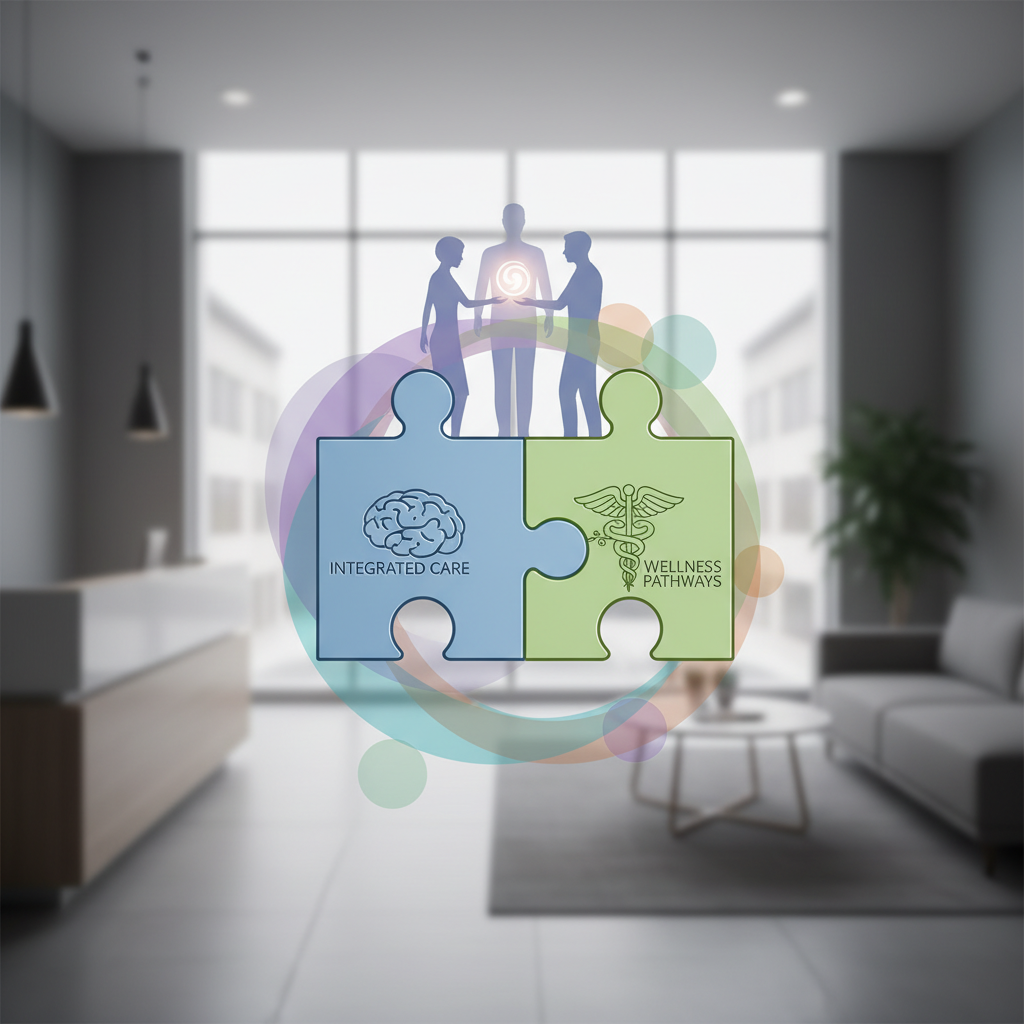
Understanding integrated mental health and addiction treatment
If you live with both a substance use issue and mental health symptoms like anxiety, depression, or trauma, it can be difficult to know where to start. Integrated mental health and addiction treatment is designed specifically for you. Instead of treating each condition separately, your care team addresses both at the same time in one coordinated plan.
This approach is often called dual diagnosis or co occurring disorder care. Research consistently shows that integrated treatment, which combines psychotherapy and medication management for two or more co occurring disorders, is more effective than treating each issue in isolation [1]. When your mental health symptoms and substance use are addressed together, you are better equipped to stabilize, reduce relapse risk, and build a sustainable recovery.
In an integrated outpatient program, you receive addiction and mental health treatment in a structured schedule while you continue living at home. This can be a strong option if you need more than standard weekly therapy but do not require inpatient care.
If you already know or suspect you have a dual diagnosis, you can also explore focused options like co occurring disorder treatment or a higher structure dual diagnosis treatment program.
Why dual diagnosis and integrated care matter
When you experience both mental health and substance use challenges, each condition typically affects the other. For example, alcohol might temporarily quiet anxiety or trauma memories, but it can worsen depression, create new stressors, and increase shame. Stopping substances without addressing these underlying issues often leaves you vulnerable and overwhelmed.
According to national data, a large share of people with substance use disorders also live with mental health conditions such as depression, anxiety, bipolar disorder, or PTSD [2]. Other studies estimate that millions of adults have co occurring disorders, yet most do not receive treatment for both conditions and many receive no care at all [3].
Treating only one side of the problem comes with risks. If your substance use is addressed but your mental health is not, unresolved symptoms such as panic, insomnia, or intrusive memories can quickly trigger relapse. If you receive mental health treatment without support for addiction, ongoing use can blunt the benefits of therapy and medication and make your symptoms more unstable. Integrated addiction and mental health treatment brings all of this into one framework so that nothing is left out.
You can think of integrated care as a single, coordinated plan where:
- Your care team understands both your mental health and substance use history
- Medication and therapy decisions consider how each condition affects the other
- You learn skills that apply to cravings, mood swings, and trauma at the same time
If you are looking for an outpatient setting that focuses on both, an outpatient dual diagnosis program can be an appropriate next step.
What happens first: Comprehensive assessment
Your experience with an integrated mental health and addiction treatment program usually begins with a detailed intake and assessment process. This is the foundation for a safe and effective plan.
Clinical and diagnostic evaluation
A comprehensive mental health assessment examines several key areas of your life. You can expect questions and screenings that explore:
- Current and past substance use, including type, frequency, and consequences
- Mental health history, including any prior diagnoses, treatments, and medications
- Symptoms such as anxiety, depression, mood swings, sleep issues, trauma memories, or psychosis
- Medical conditions and current medications
- Family history, relationships, work or school situation, and sources of support
- Safety concerns, including self harm, suicidal thinking, or risk related to withdrawal
Standardized screening tools help your team identify depression, anxiety, PTSD, bipolar disorder, and other conditions more accurately [3]. This level of detail is important because co occurring disorders are often under recognized in general settings.
Substance use and withdrawal planning
Your team will also assess whether you need medical detox or close monitoring during early sobriety. In an outpatient setting, this often means:
- Reviewing your current level of use and potential withdrawal risks
- Coordinating with medical providers if medication assisted treatment or detox support is recommended
- Planning a safe start date for intensive outpatient work
If you need a higher level of stability first, your team may help you transition into a more structured program before returning to outpatient care.
Building your individualized treatment plan
After your assessment, your team creates a treatment plan that addresses both your mental health and substance use together. This is not a one size fits all document. It evolves as your needs change.
Your plan typically includes:
- Specific diagnoses related to both mental health and substance use
- Measurable goals, such as reducing use, improving sleep, or returning to work or school
- A schedule of services like individual therapy, group therapy, psychiatric visits, and skills training
- Safety planning and crisis resources
- Relapse prevention and aftercare planning
Integrated care programs frequently use elements of the collaborative care model, where primary care, mental health, and addiction professionals coordinate around shared goals and regularly track your progress using standardized measures [4]. This kind of measurement based care allows your team to adjust treatment when symptoms do not improve as expected.
If you want a more structured framework, you might look into a structured mental health treatment program that embeds these practices in a set schedule.
Common co occurring disorders addressed in integrated care
An integrated outpatient program can address many combinations of mental health and substance use conditions. Some of the most frequent co occurring patterns include:
- Depression and alcohol or drug use
- Anxiety and stimulant, cannabis, or benzodiazepine use
- PTSD and alcohol or opioid use
- Bipolar disorder and polysubstance use
- Psychotic disorders and stimulant or cannabis use
Each combination has specific challenges. For example, depression can increase isolation and hopelessness, which may drive you back to substances even when you want to stay sober. A focused depression and addiction treatment track can help you understand how mood, thought patterns, and use interact for you.
If you struggle with constant worry, panic, or social anxiety, substances may have become a quick way to self medicate. Integrated anxiety and addiction treatment teaches you new strategies to manage physical and mental symptoms without relying on substances.
Trauma is another common factor. Many people with co occurring disorders have experienced childhood adversity, assault, combat, accidents, or other deeply distressing events. When trauma is part of your history, you may benefit from trauma informed addiction treatment that recognizes how safety, trust, and choice impact your ability to engage in care.
Key components of integrated outpatient programs
Although each program has its own structure, most integrated mental health and addiction treatment models share core elements that research links to improved outcomes [5].
Individual therapy focused on both conditions
In integrated care, your individual sessions are not just about sobriety or only about mood. Your therapist helps you draw connections between thoughts, emotions, behaviors, and use. Evidence based approaches often include:
- Cognitive behavioral therapy (CBT) to identify and change patterns that keep both substance use and symptoms going
- Motivational interviewing (MI) to strengthen your internal motivation for change at a pace that respects your ambivalence
- Skills based therapies such as dialectical behavior therapy (DBT) to manage intense emotions and impulsive behaviors
For trauma related substance use, you may work in a specialized format like therapy for substance use and trauma that integrates grounding, coping skills, and careful processing of memories.
Group therapy and psychoeducation
Group work helps you see that you are not alone in managing both mental health symptoms and addiction. Sessions often cover topics such as:
- How depression, anxiety, PTSD, and bipolar disorder interact with substance use
- Coping skills for cravings, triggers, and high risk situations
- Emotion regulation, communication, and relationship skills
- Practical steps for rebuilding daily routines, work, and social life
Some programs include specialized groups by diagnosis, such as separate tracks for PTSD or mood disorders, so that you can focus on issues that are most relevant to your experience.
Psychiatric services and medication management
Access to psychiatric services for addiction is a core part of many integrated programs. Your psychiatrist or psychiatric nurse practitioner collaborates with the rest of your team to:
- Clarify diagnoses, especially in the early stages of sobriety when symptoms can shift
- Prescribe and monitor medications for depression, anxiety, bipolar disorder, PTSD, psychosis, or ADHD
- Consider medication assisted treatment (MAT) when appropriate for opioid or alcohol use disorders
- Adjust dosing based on side effects, symptom changes, and how you are progressing in therapy
Studies show that integrated pharmacotherapy and psychotherapy for co occurring disorders produces better outcomes than either one alone, particularly when there is close, ongoing communication among providers [1]. This is why many programs emphasize mental health treatment for addiction within a coordinated team model.
Trauma informed, client centered care
If you have experienced trauma, a trauma informed approach is essential to feeling safe in treatment. Trauma informed addiction treatment respects your need for:
- Predictable routines and clear information about what to expect
- Choice and collaboration, rather than pressure or confrontation
- Sensitivity to triggers, such as certain topics, settings, or interpersonal dynamics
This approach is supported by research that highlights the importance of flexible, client centered systems that reduce organizational barriers and provide culturally competent care [3]. It also helps reduce stigma by framing both mental health and addiction as understandable responses to life experiences rather than personal failures [2].
Coordinated, team based care
Integrated programs often use a collaborative model of care, where multiple professionals share responsibility for your treatment. This may include:
- A primary therapist who coordinates your daily work in therapy
- A psychiatrist or prescribing clinician who manages medications
- A care manager who helps with appointments, benefits, and external referrals
- Group facilitators, peer specialists, or family therapists
Research on the collaborative care model shows strong evidence for improved depression outcomes and promising results for anxiety, bipolar disorder, schizophrenia, and substance use disorders [4]. The key is regular team communication and measurement based adjustments when you are not improving.
In integrated care, you are not expected to keep track of separate plans. Instead, one team shares one understanding of what you are working on and why.
How an integrated outpatient schedule typically looks
Program structure can vary, but many integrated outpatient or intensive outpatient programs (IOP) share a similar rhythm. You might:
- Attend program 3 to 5 days per week at first, often for several hours each day
- Participate in a mix of group therapy, psychoeducation, and skills training
- Meet individually with your therapist weekly or more often when needed
- See psychiatric providers regularly, especially in the early stages of medication changes
- Practice new skills and complete recovery tasks between sessions
As you progress, your schedule usually steps down to fewer days or hours per week. This gradual reduction supports a safe transition from intensive treatment back to standard outpatient care or community based supports. If you need more structure for a period of time, a structured mental health treatment program may offer extended hours and closer monitoring.
If you are uncertain which level is most appropriate, programs that focus on clinical dual diagnosis care can help assess your needs and recommend the right intensity.
Relapse prevention and long term support
An important part of integrated mental health and addiction treatment is planning for what comes next. Recovery from co occurring disorders is not a quick or linear process. Effective programs help you look beyond discharge and prepare for real life challenges.
A targeted plan for relapse prevention for co occurring disorders typically includes:
- Identifying mental health warning signs such as sleep changes, irritability, or withdrawal from others
- Mapping substance use triggers, both internal (emotions, thoughts) and external (places, people, events)
- Developing a written coping plan with specific skills, support contacts, and emergency steps
- Coordinating ongoing therapy, medication management, peer support groups, or family services
- Discussing realistic setbacks and how to respond if you slip or relapse
Research on integrated models highlights that continuity of care and supportive program culture improve your ability to sustain gains over time [6]. When your program uses tools to track progress and adjust care as needed, you are less likely to feel abandoned or blamed when symptoms fluctuate.
What you can expect emotionally and practically
Starting an integrated outpatient program can bring up mixed feelings. You may feel hopeful, overwhelmed, skeptical, or all three. Knowing what to expect can make it easier to take the first step.
Emotionally, you can expect:
- Space to talk honestly about your experiences without having to hide either your substance use or your mental health symptoms
- Some discomfort as you explore patterns, make changes, and adjust to living without substances
- Supportive feedback from providers and peers who understand the complexity of co occurring disorders
Practically, you can expect:
- A clear schedule of sessions and appointments
- Collaboration around work, school, childcare, or transportation needs where possible
- Regular check ins on your goals, symptoms, and safety
- Help connecting to medical care, social services, or community supports when needed
If you are ready to explore care that addresses both sides of your experience, you might start by looking at addiction and mental health treatment options in your area or speaking with a provider who offers clinical dual diagnosis care. Programs that emphasize integrated, measurement based, and trauma informed approaches are often best positioned to support your long term recovery.
Taking the next step
You do not need to wait until your symptoms are severe or your life feels unmanageable to seek help. Integrated outpatient programs are designed to meet you where you are, whether you are just beginning to question your use, trying to maintain early sobriety, or working to stabilize long standing mental health symptoms.
By choosing integrated mental health and addiction treatment, you give yourself the opportunity to:
- Understand how your conditions interact
- Receive coordinated support instead of fragmented care
- Build skills that support both emotional stability and sobriety
- Plan for a future that is not defined only by crisis or relapse
If you are considering your options now, exploring services such as mental health treatment for addiction or an outpatient dual diagnosis program can be a constructive next move. With the right combination of assessment, individualized planning, therapy, psychiatric care, and long term relapse prevention, integrated treatment can help you move toward a more stable and connected life.
References
- (PMC)
- (Bonfire Behavioral Health)
- (PMC – NCBI)
- (PMC)
- (PMC; PMC)
- (Recovery Answers)