
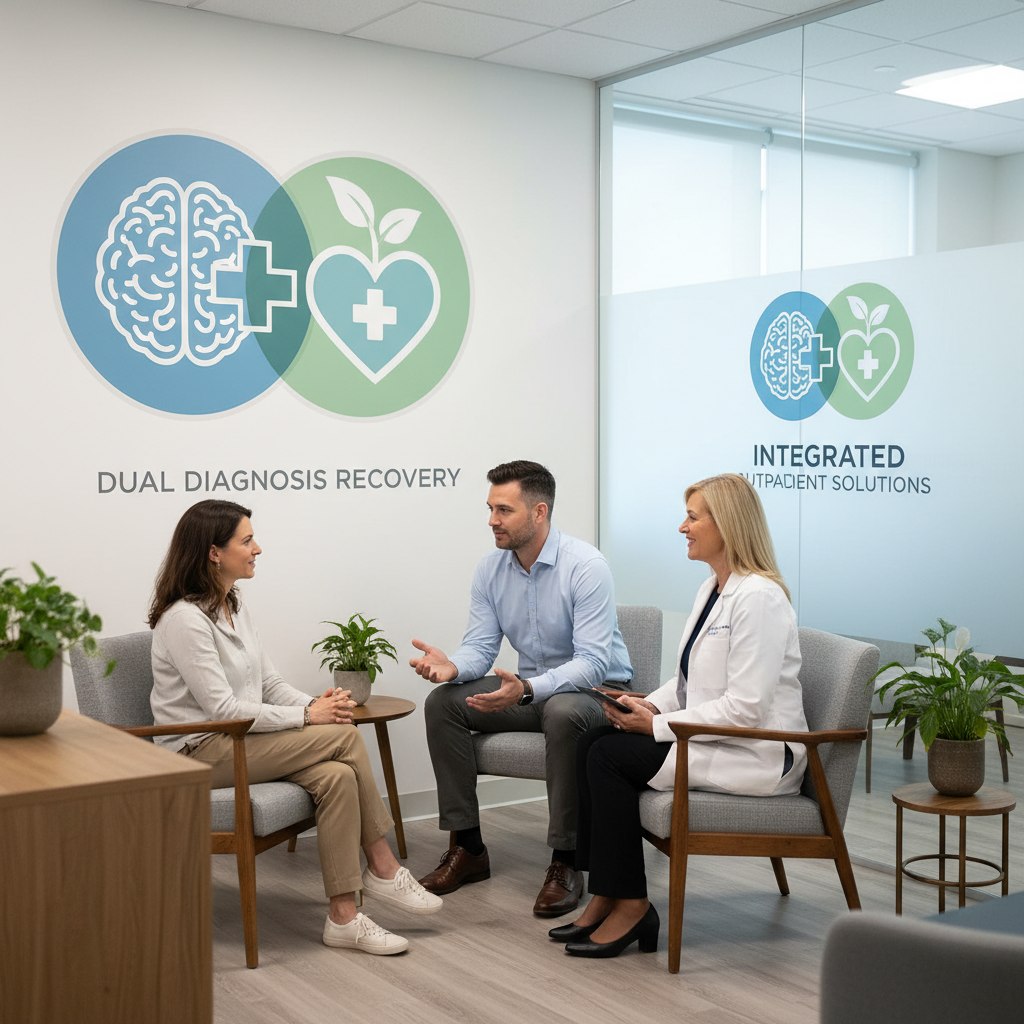
Understanding dual diagnosis and why it matters
If you are living with both a mental health condition and a substance use problem, you are not alone. Dual diagnosis, sometimes called co occurring disorders, describes having a mental health disorder and a substance use disorder at the same time. The symptoms often interact and worsen each other, which is why a specialized dual diagnosis treatment program can be life changing [1].
In 2023, an estimated 20.4 million adults in the United States had a dual diagnosis, which shows how common this combination really is [1]. When you try to treat only the substance use or only the mental health issue, the untreated condition usually undermines your progress. Integrated care that addresses both at the same time leads to better diagnosis, more effective treatment, and improved quality of life [2].
A dual diagnosis treatment program is designed specifically for this complexity. It brings mental health and addiction services together so you can work on your whole self, not just one piece at a time.
How dual diagnosis affects your daily life
Having both a mental health condition and a substance use disorder can touch every area of your life. You might feel like you are constantly stuck in a loop. You use substances to cope with symptoms like anxiety, depression, or trauma, then the substance use makes those symptoms worse.
Common ways dual diagnosis can show up include:
- Using alcohol or drugs to manage panic, sadness, or intrusive memories
- Increased isolation or conflict in relationships
- Trouble keeping up with responsibilities at work, school, or home
- Worsening physical health from both substance use and untreated mental illness
Mental health and substance use disorders frequently co occur, especially for teenagers, people with serious mental illness, and those with certain diagnoses like depression or PTSD [3]. It is often difficult to know which came first, and research suggests there may be multiple reasons why they appear together rather than one simply causing the other [3].
When you enroll in a co occurring disorder treatment program, you give yourself a chance to step out of that cycle. Instead of trying to manage symptoms on your own, you have a team that understands how intertwined everything is.
Why integrated care works better
In a traditional model, you might see one provider for mental health and another for addiction, with little coordination between them. This can leave you feeling like you are getting mixed messages or partial answers. An integrated dual diagnosis treatment program takes a different approach.
Integrated treatment means:
- Your mental health and substance use are evaluated and treated together
- One coordinated team shares information and collaborates on your care
- Services are tailored to both your emotional and physical needs, not just one or the other [2]
There are different models of integrated care, such as coordinated, co located, or fully integrated programs, with fully integrated care often offering the most complete recovery support [2]. Regardless of the exact model, the goal is the same. You should not have to figure out where to start or which problem is more important. SAMHSA describes a “no wrong door” approach so that whenever you reach out, you are screened and supported for both conditions at the same time [2].
When mental health and substance use care are combined, about half of people with co occurring disorders respond well to treatment, especially when they also receive ongoing support such as peer groups and regular follow up with providers [1]. That kind of sustained support is what helps recovery last.
What to expect from a dual diagnosis evaluation
A strong dual diagnosis treatment program begins with a careful assessment process. Rather than focusing only on substances or only on mood, your team will look at all the pieces that influence your health.
You can expect a comprehensive mental health assessment that may include:
- Detailed questions about your substance use history
- Screening for depression, anxiety, bipolar disorder, PTSD, and other conditions
- Review of your medical history and current medications
- Exploration of trauma, family history, and social support
- Discussion of your goals, values, and what you want to change
This assessment is collaborative. You are not just answering questions. You are helping shape a treatment plan that makes sense for your life. The result is an individualized, structured mental health treatment program that addresses both your mental health and substance use simultaneously [3].
Trauma informed, person centered care
For many people with a dual diagnosis, trauma plays a central role. Past experiences of abuse, neglect, violence, or chronic stress can drive both mental health symptoms and substance use. A trauma informed addiction treatment program understands this connection and intentionally avoids approaches that might feel shaming or re triggering.
Trauma informed care means your providers:
- Recognize the prevalence and impact of trauma in people with co occurring disorders
- Prioritize safety, trust, and emotional regulation
- Invite, rather than demand, disclosure of painful experiences
- Work with you to build coping skills before exploring deeper trauma material
When you participate in trauma informed addiction treatment or therapy for substance use and trauma, the focus is not only on telling your story. It is also on how your body and mind respond in the present and how you can regain a sense of control.
A positive therapeutic alliance, meaning a strong, trusting relationship with your treatment team, is one of the most important predictors of success. Research shows that an empathic, supportive counseling style helps you recognize and manage feelings, strengthens motivation, and improves medication adherence [4]. In other words, feeling understood and respected is not extra. It is central to recovery.
In dual diagnosis treatment, feeling safe enough to be honest often becomes the turning point where real change begins.
Core components of a dual diagnosis treatment program
A well designed dual diagnosis treatment program usually combines several evidence based elements. These are adjusted to fit whether you are in an outpatient, intensive outpatient, or inpatient setting.
Individual therapy focused on co occurring disorders
Individual counseling gives you space to explore the specific ways mental health and substance use interact in your life. Therapies like cognitive behavioral therapy (CBT) help you identify thought patterns and behaviors that keep you stuck and replace them with more effective coping strategies. This is a cornerstone of many addiction and mental health treatment plans.
Your therapist might help you:
- Track connections between mood changes and cravings
- Challenge beliefs like “I cannot cope without using”
- Practice new skills for managing triggers, conflict, and stress
- Set realistic goals and review your progress regularly
Group therapy and peer support
Group sessions connect you with others who are living with co occurring disorders. Sharing experiences in a structured group can reduce shame and isolation and give you a chance to practice communication skills in real time.
Dual recovery mutual support groups are also a valuable addition to formal treatment. They provide ongoing peer support tailored specifically to co occurring disorders, which can help you maintain gains after a program ends [4].
Psychiatric evaluation and medication management
Medication can be an important part of dual diagnosis care for conditions like depression, anxiety, bipolar disorder, or psychotic disorders. In an integrated setting, psychiatric services for addiction are coordinated with counseling and substance use treatment.
This usually includes:
- A full psychiatric evaluation to clarify diagnoses
- Discussion of medication options, benefits, and side effects
- Regular follow up to monitor how you respond
- Adjustments based on your feedback and changes in symptoms
Supportive counseling that respects your concerns and preferences about medication makes it more likely you will take it as prescribed and benefit from it [4].
Detox and medical support when needed
If you are physically dependent on alcohol, benzodiazepines, opioids, or other substances, a medically supervised detox may be the safest first step. Inpatient detox for dual diagnosis often involves 24 hour monitoring for up to a week so you can withdraw safely while mental health symptoms are monitored and managed at the same time [1].
Even if you attend an outpatient dual diagnosis program, your team will coordinate with medical providers if detox is required before you begin outpatient work.
Common co occurring disorders addressed in treatment
A dual diagnosis treatment program is designed to work with many different combinations of mental health and substance use conditions. Some of the most common include:
Depression and addiction
Depression can leave you feeling hopeless, unmotivated, and disconnected from life. Substances may seem like the only way to feel anything at all. Unfortunately, alcohol and drugs often deepen depressive symptoms and increase the risk of self harm.
In depression and addiction treatment, your team will help you:
- Stabilize mood with therapy and, when appropriate, medication
- Address patterns of thinking that feed both depression and substance use
- Rebuild daily routines, sleep, and activities that support wellbeing
Anxiety and addiction
If you struggle with panic, generalized anxiety, social anxiety, or trauma related anxiety, using substances to calm your nerves can feel like a short term solution. Over time, this tends to increase anxiety and can make you feel even more out of control.
Anxiety and addiction treatment often focuses on:
- Learning body based techniques to manage physical symptoms of anxiety
- Challenging catastrophic thinking and avoidance
- Practicing gradual exposure to feared situations without using substances
Trauma, PTSD, and substance use
Trauma is a powerful risk factor for both mental health disorders and substance use. Untreated trauma can drive nightmares, flashbacks, hypervigilance, and emotional numbing. Using alcohol or drugs to escape these symptoms is very common, but it can quickly become its own source of harm.
Through therapy for substance use and trauma and integrated mental health and addiction treatment, you can learn to process trauma safely, reduce symptoms, and build resilience without relying on substances.
The role of outpatient dual diagnosis programs
You might worry that you have to put your entire life on hold to get help. For many adults, an integrated outpatient program is an effective way to receive dual diagnosis care while continuing to live at home and maintain some work, school, or family responsibilities.
In an outpatient dual diagnosis program, you can expect:
- Scheduled individual and group therapy sessions
- Regular psychiatric follow up and medication management
- Education on mental health, addiction, and relapse prevention
- Coordination with your primary care provider or other specialists
Outpatient care can be especially helpful once you have completed detox or a higher level of care, but it can also be a starting point if your symptoms are stable enough to manage outside of a residential setting. The key is that services are integrated and focused on both sides of your condition, not just substance use or just mental health.
Building a long term relapse prevention plan
Recovery from co occurring disorders is not a one time event. It is an ongoing process that benefits from continued support and structure. A strong dual diagnosis treatment program will begin planning for relapse prevention early so that you have tools in place when you complete formal treatment.
Relapse prevention for co occurring disorders often includes:
- Identifying your personal triggers for both substance use and mental health flare ups
- Developing coping strategies you can use in early warning stages
- Creating a clear crisis or safety plan for high risk moments
- Setting up ongoing outpatient care or support groups
Continuity of care, meaning consistent treatment that adjusts over time, is especially important for dual diagnosis. This may involve continued symptom monitoring, medication management, and coordination across multiple settings to help you stay on track [4]. When your team stays connected, you are less likely to fall through the cracks.
How a dual diagnosis program can transform your life
When you commit to a dual diagnosis treatment program, you are choosing more than symptom relief. You are choosing a different way of relating to yourself, your past, and your future.
Over time, integrated care can help you:
- Experience fewer crises related to mental health or substance use
- Improve your relationships as you communicate more openly and reliably
- Restore routines around sleep, nutrition, and daily structure
- Reconnect with interests, values, and goals that were pushed aside
- Feel more confident managing both your emotions and your recovery
Many people with co occurring disorders have faced stigma, misdiagnosis, or fragmented care. Research shows that when treatment programs increase their capability to provide truly integrated services, outcomes improve significantly over time [5]. You deserve access to clinical dual diagnosis care that sees the full picture of who you are.
If you are ready to explore your options, you might start by seeking a comprehensive mental health assessment and talking with a provider about mental health treatment for addiction. With the right support in place, you can move from surviving each day to building a life that feels meaningful and sustainable.
You do not have to manage this alone. Integrated dual diagnosis treatment is designed to walk with you, step by step, as you reclaim your health and your future.
References
- (Cleveland Clinic)
- (SAMHSA)
- (MedlinePlus)
- (NCBI Bookshelf)
- (NCBI)