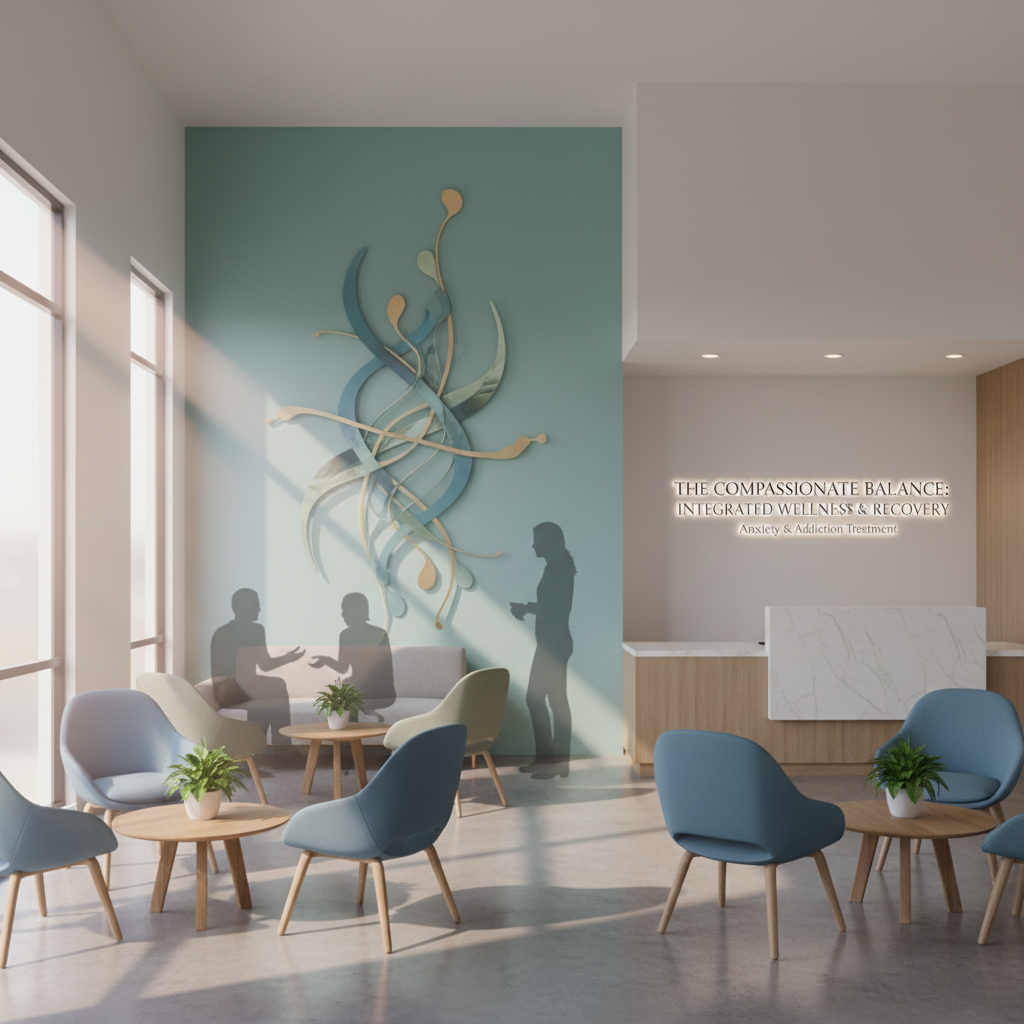
Living with constant worry and relying on substances to cope can leave you feeling stuck. Anxiety and addiction treatment that addresses both at the same time gives you a way forward. Instead of asking you to fix one problem before you can work on the other, an integrated outpatient program is designed to treat your mental health and substance use together so that real, lasting recovery is possible.
Understanding anxiety and addiction together
Anxiety disorders and substance use disorders often occur at the same time. Large epidemiologic studies have found that about 17.7% of people with a substance use disorder also have an independent anxiety disorder, and about 15% of people with an anxiety disorder have a co-occurring substance use disorder [1]. Other estimates show that roughly 1 in 5 people with an anxiety disorder also live with a substance use disorder [2].
You might use alcohol, marijuana, or medications to calm your nerves, help you sleep, or get through stressful situations. This can feel helpful in the short term, but over time substances tend to increase anxiety instead of reducing it. Alcohol, for example, can worsen anxiety as tolerance develops and during withdrawal. Anxiety is one of the most common symptoms when alcohol use is reduced or stopped, which can make it harder to stay sober without support [2].
The same pattern can occur with other substances. Marijuana may offer temporary relief, yet it is strongly linked to generalized anxiety disorder and can lead to dependency and an increased risk of using more addictive substances [2]. Stimulants, whether prescribed or misused, can trigger or intensify anxiety symptoms by activating your central nervous system, and this is especially common among students and high performers who rely on stimulants to keep up [2].
When you are dealing with both conditions, trying to treat only your substance use or only your anxiety often is not enough. Integrated anxiety and addiction treatment looks at the full picture and supports you in both areas at the same time.
What dual diagnosis means for you
When you have both a substance use disorder and a mental health condition like an anxiety disorder, depression, or PTSD, you may hear the term dual diagnosis or co occurring disorders. A dual diagnosis means that each condition is present on its own and that each one affects the other.
Substance use disorder is a treatable mental health condition characterized by a pattern of alcohol or drug use that harms your health, relationships, or functioning. It can range from mild to severe and can involve alcohol, opioids, stimulants, marijuana, or other substances [3]. Anxiety disorders, including generalized anxiety disorder, panic disorder, and social anxiety disorder, involve persistent fear or worry that interferes with daily life.
You may notice that when your anxiety increases, your cravings and substance use also increase. Or when you try to quit using, your anxiety becomes overwhelming. This back and forth can be discouraging, especially if you have tried to get help before and were told to focus on only one problem at a time. A dual diagnosis treatment program is built specifically for situations like yours. It acknowledges that both conditions are real, valid, and need attention.
Research shows that trying to treat only one condition, for example, stopping substances without addressing anxiety, often leads to the return of symptoms or a relapse in substance use [2]. Integrated care is designed to interrupt this cycle and support more stable progress.
Why integrated care improves outcomes
Integrated mental health and addiction treatment provides coordinated care for all of your conditions at once. You are not sent to separate programs with separate treatment plans that do not communicate. Instead, one team understands your anxiety, your substance use, and how they interact.
Epidemiologic studies highlight the need for this approach. Anxiety disorders and substance use disorders commonly co-occur, and conditions such as PTSD are strongly associated with substance use. Nearly half of people with PTSD in one large survey also met criteria for a substance use disorder, and people with PTSD were 2 to 4 times more likely to have a substance use disorder than those without PTSD [1]. When trauma symptoms are not treated alongside substance use, staying in recovery is much more difficult.
Integrated anxiety and addiction treatment helps by:
- Reducing gaps where one condition is missed or minimized
- Coordinating therapy, medications, and skills training so they work together
- Addressing trauma, anxiety, mood, and substance use as part of one plan
- Supporting you in building consistent coping strategies instead of short-term fixes
You can learn more about this approach in our overview of integrated mental health and addiction treatment.
Common co occurring disorders with anxiety and addiction
If you are seeking anxiety and addiction treatment, you may be dealing with more than one mental health concern at the same time. Co occurring disorder treatment is about recognizing and treating all of these conditions in a coordinated way.
Some of the most common combinations include:
- Generalized anxiety disorder and alcohol or marijuana use
- Panic disorder and alcohol, benzodiazepines, or nicotine use
- Social anxiety disorder and alcohol or stimulant use
- PTSD and alcohol, opioids, or other substances
- Depression and substance use, especially alcohol or sedatives
For example, people with panic disorder have increased risks of alcohol and drug dependence, and nicotine dependence is also much more common in panic disorder, social anxiety, and generalized anxiety disorder [1]. Smoking can briefly reduce anxiety, but it can also cause or worsen anxiety over time, which adds complexity to treatment.
If depression is part of your experience along with anxiety and substance use, you may relate to the need for depression and addiction treatment that addresses low mood, motivation, and substance use together.
By working with a team skilled in co occurring disorder treatment, you can receive care that does not overlook any part of your experience.
Why outpatient dual diagnosis care may fit your life
You might be looking for help that is structured and evidence-based, yet still fits around your responsibilities at home, work, or school. An outpatient dual diagnosis program is designed for exactly that purpose. Instead of living at a facility full time, you attend scheduled treatment sessions during the week and return home at night.
Outpatient care may be a good fit if you:
- Need regular, intensive support but cannot step away from family or work entirely
- Have stable housing and a reasonably safe, supportive environment
- Are motivated to engage in therapy, skills practice, and medication management
- May be stepping down from a higher level of care and want continued support
Within an outpatient setting, you can be part of a structured mental health treatment program that includes group therapy, individual counseling, psychiatric care, and education about both mental health and substance use. This structure helps you build and practice new skills in real time, in the same environments where you face triggers and stress.
Starting with a comprehensive assessment
Effective anxiety and addiction treatment begins with a clear understanding of what you are facing. A comprehensive mental health assessment is the starting point for an integrated outpatient program.
During this assessment, your clinical team typically:
- Reviews your substance use history, including patterns, previous attempts to cut down, and withdrawal symptoms
- Screens for anxiety disorders, depression, PTSD, and other mental health conditions
- Explores your medical history, sleep, mood, relationships, and current stressors
- Identifies safety concerns, such as suicidal thoughts or severe withdrawal risk
- Discusses your goals for recovery and what has helped or not helped in the past
This level of detail matters. Anxiety disorders and substance use can look different from person to person, and they often overlap with other conditions. For instance, PTSD symptoms may be misinterpreted as general anxiety, or alcohol withdrawal may be mistaken for a panic attack. A careful assessment helps clarify what is going on so that your treatment plan is accurate and personalized.
Building an individualized treatment plan
Once your assessment is complete, your team creates an individualized plan that addresses all of your conditions. This plan is not a one-size-fits-all checklist. It takes into account your strengths, preferences, cultural background, and specific challenges.
An integrated plan often includes:
- Individual therapy focused on anxiety, substance use, and related issues
- Group therapy that offers education, skills, and peer support
- Medication management for anxiety, depression, or substance use, when appropriate
- Psychoeducation about how anxiety and addiction affect your brain and body
- Relapse prevention planning tailored for co occurring disorders
- Coordination with your primary care or other providers as needed
When you participate in clinical dual diagnosis care, your providers work together rather than in isolation. For example, if you start a new medication for anxiety, your therapist and prescriber coordinate to monitor both your anxiety symptoms and your cravings or use patterns.
Trauma informed care and your safety
If you have experienced trauma, it may play a central role in both your anxiety and your substance use. Trauma informed addiction treatment recognizes that traumatic experiences can shape how you think, feel, and cope, and that standard approaches that ignore trauma can feel unsafe or ineffective.
In a trauma informed program, your providers:
- Assume that trauma may be present and avoid asking you to disclose more than you feel ready to share
- Prioritize emotional and physical safety in sessions and groups
- Help you understand how trauma responses, such as hypervigilance or emotional numbing, relate to anxiety and substance use
- Use therapies that are proven to help with both PTSD and substance use when you are ready, such as integrated trauma and substance use treatments [1]
You can explore more about these approaches in our overview of trauma informed addiction treatment and therapy for substance use and trauma.
Trauma informed care is not about forcing you to talk about painful memories before you are ready. Instead, it focuses on building safety, choice, and control so that you can decide when and how to address trauma as part of your recovery.
When trauma, anxiety, and substance use are treated together in an integrated way, you are less likely to feel that one part of your experience is being ignored or minimized.
Individual therapy for anxiety and substance use
In individual therapy, you work one-on-one with a clinician to understand and change the patterns that keep you stuck. Cognitive behavioral therapy (CBT) is one of the most studied treatments for anxiety and substance use and is often a core part of integrated care.
CBT helps you:
- Identify thoughts that increase your anxiety and drive you toward substance use
- Learn skills to challenge and reframe those thoughts
- Practice new behaviors, such as healthier coping strategies and communication
- Reduce avoidance so that you can engage more fully in your life
Research shows that CBT adapted for co occurring anxiety and alcohol use disorder leads to small but meaningful improvements in both anxiety and drinking outcomes [4]. Other therapies, such as acceptance and commitment therapy and unified protocol approaches, are also showing promising results when they target both anxiety and alcohol use at the same time [4].
In addition to CBT, your therapist may integrate elements of motivational interviewing, mindfulness, and relapse prevention. The goal is to help you develop skills that you can use in the moments when anxiety spikes and cravings appear so that substances are not your only option.
Psychiatric services and medication support
Medication can be an important part of anxiety and addiction treatment, especially when you are living with moderate or severe symptoms. In a program that offers psychiatric services for addiction, you meet with a psychiatric provider who can evaluate, prescribe, and monitor medications as part of your overall plan.
For co occurring anxiety and substance use disorders, your prescriber may consider:
- Antidepressants, such as SSRIs, which are effective for many anxiety disorders and are not addictive
- Non benzodiazepine anti anxiety medications that support stabilization without high misuse risk
- Medications approved by the FDA for substance use disorders, which can reduce cravings or withdrawal symptoms and support sobriety [3]
Benzodiazepines are generally used cautiously or avoided in people with substance use disorders because of their abuse potential and the risk of dependence [1]. Your provider will discuss the potential benefits and risks with you, and any medications will be monitored closely.
Medication is most effective when it is combined with therapy. Studies show that focusing only on medication for anxiety in the context of alcohol use disorder leads to modest improvements in anxiety but limited changes in alcohol use [4]. This is why integrated addiction and mental health treatment that combines both approaches tends to lead to better outcomes.
Skills, education, and relapse prevention
Living with anxiety and a substance use disorder often means that stress and strong emotions can quickly lead back to old patterns. Relapse prevention for co occurring disorders focuses on reducing this risk by giving you tools and strategies that are matched to your specific challenges.
A strong relapse prevention plan often includes:
- Identifying people, places, thoughts, and feelings that increase both anxiety and cravings
- Learning specific coping tools for high anxiety moments, such as grounding, paced breathing, and urge surfing
- Building a daily structure that supports sleep, nutrition, movement, and connection
- Planning for how to ask for help early if you notice warning signs
- Addressing ongoing mental health care so that symptoms do not gradually build until they feel unmanageable
You can learn more about how these pieces fit together in our guide to relapse prevention for co occurring disorders.
Integrated programs also often provide education about how substances affect your brain and body, how anxiety works physiologically, and why certain strategies are recommended. Understanding the “why” behind your treatment can make it easier to stay engaged and to notice small improvements over time.
How integrated outpatient care supports long term recovery
Recovery from anxiety and addiction is not a quick or linear process. There may be setbacks, changes in life circumstances, and periods when symptoms flare. An outpatient program that offers ongoing, integrated care helps you navigate these changes without losing the progress you have made.
Over time, you may move from higher intensity services, such as multiple therapy sessions each week, to a less intensive structured mental health treatment program that focuses on maintenance and growth. Throughout this process, the connection between your mental health and substance use remains central. You are not expected to separate your anxiety from your recovery, or your trauma from your cravings. Instead, you are supported as a whole person.
Engaging in mental health treatment for addiction is not about proving that you are “sick enough” to deserve help. It is about recognizing that both your anxiety and your substance use deserve care and that you do not have to manage them alone.
If you are ready to explore options, you can start by learning more about clinical dual diagnosis care and the types of integrated outpatient programs that may fit your needs. With the right support, it is possible to reduce anxiety, change your relationship with substances, and build a more stable and meaningful life.