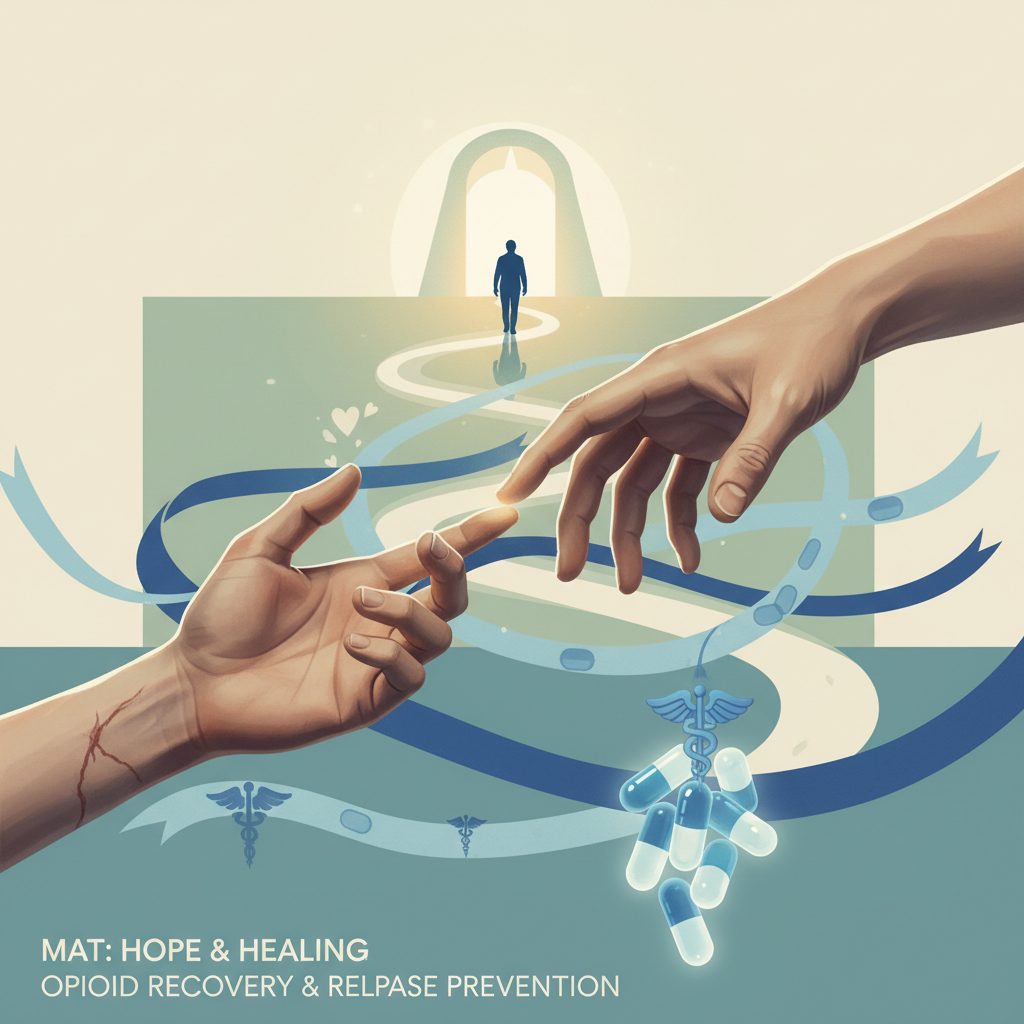
Why relapse prevention is the heart of opioid treatment
When you look for an opioid relapse prevention program, you are not just trying to stop using for a few days. You are trying to protect your future, your health, and your ability to live a productive life again. Research-based treatments can help you stop using drugs and return to work, school, and family life, which is what recovery really means [1].
Addiction treatment does not erase addiction, it helps you manage it in the same way people manage chronic conditions like heart disease or asthma. With the right combination of medication, therapy, and monitoring, you can regain control over your brain and behavior and dramatically lower your risk of relapse [1]. This is exactly what a strong outpatient medication assisted treatment (MAT) program is designed to do.
How an opioid relapse prevention program works
An effective opioid relapse prevention program usually brings together three core elements: medication, behavioral therapy, and ongoing monitoring. A recent review of relapse prevention strategies highlights these three approaches as the backbone of long term recovery support [2].
In a structured outpatient opioid treatment program, you meet regularly with medical and clinical providers while continuing to live at home. Your team helps you stabilize withdrawal, reduce cravings, build new coping skills, and stay accountable over time. This approach is often covered by insurance and can be a practical alternative to inpatient rehab if you have work, school, or family responsibilities.
Why outpatient MAT is central to relapse prevention
Combining medication and therapy
For opioid and fentanyl addiction, medication is considered a first line treatment, usually combined with counseling or behavioral therapy [1]. An outpatient MAT program uses FDA approved medications to:
- Ease or prevent withdrawal symptoms
- Reduce or block cravings
- Normalize brain chemistry over time
- Lower the risk of relapse and overdose
At the same time, therapy helps you understand why you used, how to manage stress and triggers, and how to rebuild your life in recovery. MAT is most effective when medication and therapy work together rather than on their own.
A practical alternative to inpatient rehab
If you cannot step away from your daily responsibilities, outpatient MAT can give you a strong level of structure without requiring you to live in a facility. In a structured outpatient opioid treatment setting, you typically:
- Attend medical visits for medication management
- Participate in individual and group therapy
- Complete regular drug screens
- Follow a personalized relapse prevention plan
This level of oversight and support can make the difference between short term abstinence and sustained recovery.
Medications commonly used in relapse prevention
Several medications play a central role in opioid relapse prevention. Each works in a different way and fits different needs and goals.
Suboxone and other buprenorphine based medications
Buprenorphine is a partial opioid agonist, which means it activates the same receptors as opioids but in a controlled and safer way. Often combined with naloxone, it is used widely in programs such as a suboxone treatment clinic or suboxone therapy program.
Buprenorphine can:
- Reduce cravings and withdrawal
- Lower the risk of misuse compared to full agonists
- Allow more flexibility, such as office based or at home dosing
Buprenorphine based care is a cornerstone of many buprenorphine treatment program models and is strongly supported by research as a key part of opioid relapse prevention [2].
Methadone and intensive clinic based care
Methadone is a full opioid agonist and has been used for decades in opioid treatment. It can provide very stable control of cravings and withdrawal but usually requires daily observed dosing at a specialized clinic.
Evidence shows methadone can result in lower relapse rates than some other medications, although the higher level of clinic supervision can be demanding [2]. Many outpatient MAT settings coordinate with methadone clinics when this is the right medical choice for you.
Naltrexone and opioid blocking
Naltrexone is an opioid antagonist. It blocks opioid receptors so that if you use opioids, you do not feel the usual effects. This can help deter relapse, especially once you have completed withdrawal.
In a naltrexone treatment for opioid addiction setting, you may receive oral naltrexone or a long acting injection. This approach may fit you if:
- You have fully detoxed from opioids
- You prefer a non opioid medication
- You want an extra layer of protection if you are worried about slipping
The right choice among Suboxone or buprenorphine, methadone, and naltrexone depends on your health history, pattern of use, and goals. A clinical opioid addiction treatment provider can help you decide.
In effective opioid relapse prevention, medication is not optional add on support. It is a central tool that reduces relapse risk and supports everything you do in therapy.
The role of therapy, skills, and monitoring
Cognitive behavioral therapy and mindfulness
Cognitive behavioral therapy (CBT) is one of the most widely used therapies in opioid relapse prevention. It helps you notice and change the thoughts and behaviors that drive substance use and teaches concrete coping skills for triggers, stress, and cravings [2].
Many programs now include mindfulness based approaches as well. Techniques like brief meditations can increase your awareness of urges without automatically acting on them and have been shown to help reduce relapse in opioid use disorder [3].
In a strong medication assisted treatment program, these therapies are integrated with your medication plan rather than treated as separate services.
Drug monitoring and accountability
Relapse prevention programs also emphasize regular monitoring. Drug screens and related tests:
- Provide objective information about your progress
- Help your team catch slips early
- Support medication adherence
- Serve as a deterrent against returning to use
A 2023 review notes that drug monitoring is an important tool in detecting opioid or other substance use and in reinforcing adherence to medication based care [2]. When monitoring is paired with supportive feedback instead of punishment, it becomes a helpful part of your safety net.
Peer and community support
Peer support groups like Narcotics Anonymous and recovery coaching can add another layer of protection. People who have maintained abstinence for extended periods can offer practical guidance and encouragement as you navigate early and long term recovery [2].
These supports work best as part of a larger medication assisted recovery program, not as replacements for medical and therapeutic care.
Special focus: fentanyl and high risk relapse
If you have been using fentanyl, your relapse risk and overdose risk are especially high. The potency of fentanyl makes withdrawal more severe and cravings more intense. A fentanyl addiction treatment program addresses these challenges with:
- Careful detox support and opioid withdrawal treatment with medication
- Higher intensity monitoring early in care
- Education on overdose risk and naloxone use
Programs must also warn you that after even a short period of abstinence, your tolerance drops. If you return to your previous dose, the risk of fatal overdose rises sharply. National guidance stresses overdose education and access to naloxone as essential parts of relapse prevention for opioid and fentanyl use [3].
For some people, a fentanyl detox outpatient program can be a realistic starting point, especially when it is closely linked with ongoing MAT and therapy.
Dual diagnosis, trauma, and mental health
Many people who seek an opioid relapse prevention program also live with depression, anxiety, PTSD, or other mental health conditions. If these underlying issues are not treated, they can become powerful triggers for relapse.
A dual diagnosis mat program addresses both at the same time. In this setting, you work with clinicians who understand how:
- Mood symptoms drive cravings
- Trauma and stress increase relapse risk
- Medications for mental health interact with MAT
This integrated approach helps you build a more stable emotional foundation so that medication alone is not holding up your recovery.
Building a personalized relapse prevention plan
Effective programs do more than give you medication and therapy visits. They help you create a written, personalized relapse prevention plan. Guidance from the VA Whole Health Library emphasizes that these plans should identify your internal and external triggers, coping skills, and what to do if your risk spikes [3].
In collaboration with your team, your plan may cover:
- Your top triggers, such as specific people, places, or emotional states
- Early warning signs that your risk is rising
- Coping strategies you will use in those moments
- Who you will contact if you feel close to using
- How medication adjustments or extra visits will be handled
This plan is a living document. As your recovery grows, your triggers and supports change, and your plan should change with them.
Understanding success, relapse, and long term recovery
Relapse does not mean treatment has failed. It reflects the chronic nature of addiction, and it shows that your plan needs adjustment, not that you cannot recover [1].
Research suggests that roughly 60 percent of people with substance dependence eventually reach sustained recovery, but many go through cycles of lapse, relapse, and treatment reentry before they get there [3]. Persistent support is critical, especially in the first months after detox, when relapse is most common.
A mat for long term recovery approach recognizes this reality. Instead of seeing MAT as a short, one time fix, it views medication, therapy, and monitoring as tools you can use for as long as they help you stay safe and stable.
How to compare opioid relapse prevention programs
When you evaluate an opioid relapse prevention program, it helps to look beyond marketing language and focus on specific features that matter for your safety and success.
Key elements to look for
Ask each program:
- Do you offer evidence based medications such as buprenorphine, Suboxone, methadone coordination, or naltrexone? An evidence based opioid treatment approach should align with current research, including the use of medication as a central tool in care [1].
- How do you integrate therapy with medication? Look for programs that combine MAT with CBT, mindfulness, and other therapies rather than treating them as optional add ons.
- What kind of monitoring and follow up do you provide? Regular visits, drug screening, and proactive outreach are signs of a strong clinical opioid addiction treatment program.
- Do you treat co occurring mental health conditions? Dual diagnosis support can be crucial if you live with anxiety, depression, or trauma.
- How will you help me in the first weeks and months after detox? Early relapse is common, so you want a plan for intensive support right away [3].
Insurance and access
Cost is often a deciding factor. An insurance covered mat program can make high quality outpatient care realistic for you. Ask programs:
- Which insurance plans they accept
- Whether they assist with verification and prior authorizations
- If they offer payment plans or sliding scale options
You can also ask about any separate costs for labs, drug screens, or medications so you understand the full picture before you commit.
How different outpatient MAT options fit together
To help you see how common options compare, here is a simple overview of some services you might encounter as you choose care:
| Service type | Primary focus | Who it may fit |
|---|---|---|
| Outpatient MAT program | Ongoing medication plus therapy, flexible schedule | You need regular support and structure but must live at home |
| Suboxone treatment clinic | Office based buprenorphine and counseling | You want Suboxone or similar medication with close medical follow up |
| MAT clinic for opioid use disorder | Full range of MAT options with clinical oversight | You want a comprehensive, medically supervised setting |
| Medication assisted treatment program | Integrated medication, therapy, and monitoring | You prefer one coordinated team managing all aspects of care |
| Fentanyl detox outpatient program | Stabilizing withdrawal and cravings for fentanyl | You are currently using fentanyl and want to start safely |
These are not competing paths. Many people move between them over time as their needs change.
FAQs about opioid relapse prevention programs
Will I go through withdrawal in an outpatient MAT program?
If you are still using opioids when you enter care, your team will create a plan for opioid withdrawal treatment with medication. Medications such as buprenorphine or methadone can significantly reduce withdrawal symptoms, and your provider will time the first dose carefully to avoid making symptoms worse.
Some people complete or start detox in a higher level of care and then transition into outpatient. Others begin directly in an outpatient setting. The key is that you are not expected to go through withdrawal alone.
How long will I need medication and treatment?
There is no single timeline. Because addiction is a chronic condition, some people benefit from long term or even indefinite MAT. Others eventually taper under medical supervision. The most important factor for relapse prevention is not how quickly you stop medication. It is how well your symptoms are controlled, how stable your life is, and how strong your coping skills and supports have become.
A mat for long term recovery mindset means you and your team focus on what keeps you safest and most stable, not on arbitrary deadlines.
Am I a candidate for MAT if I have relapsed before?
Yes. Relapse does not disqualify you from care. In fact, it highlights how important it is to have a more robust plan. National guidance stresses that relapse is part of the chronic nature of addiction and does not mean treatment has failed [1].
If you have relapsed on MAT before, your team will look at:
- Whether your dose was adequate
- Whether mental health or life stressors were unaddressed
- Whether monitoring or support could be strengthened
From there, your opioid addiction medication treatment can be adjusted rather than abandoned.
What if my main problem is fentanyl, not heroin or pills?
MAT is effective for fentanyl use disorder as well. A fentanyl addiction treatment program will often use buprenorphine, methadone coordination, or naltrexone once withdrawal is managed. Because fentanyl is so potent, programs may start you at different doses or use specific induction strategies, but the core principles of relapse prevention are the same.
Taking your next step toward protection and stability
Choosing an opioid relapse prevention program is a decision about protecting your future. With an evidence based opioid treatment approach that combines medication, therapy, monitoring, and personalized planning, you can significantly reduce your risk of relapse and overdose and move toward a more stable and productive life.
If you are ready to explore care, consider connecting with a mat clinic for opioid use disorder or a coordinated medication assisted treatment program. Ask questions, review your insurance options, and look for a team that treats you as a partner in your own recovery.
You do not have to manage opioid or fentanyl addiction on your own. With the right outpatient support, you can build a recovery plan that protects your health and your future, one step at a time.