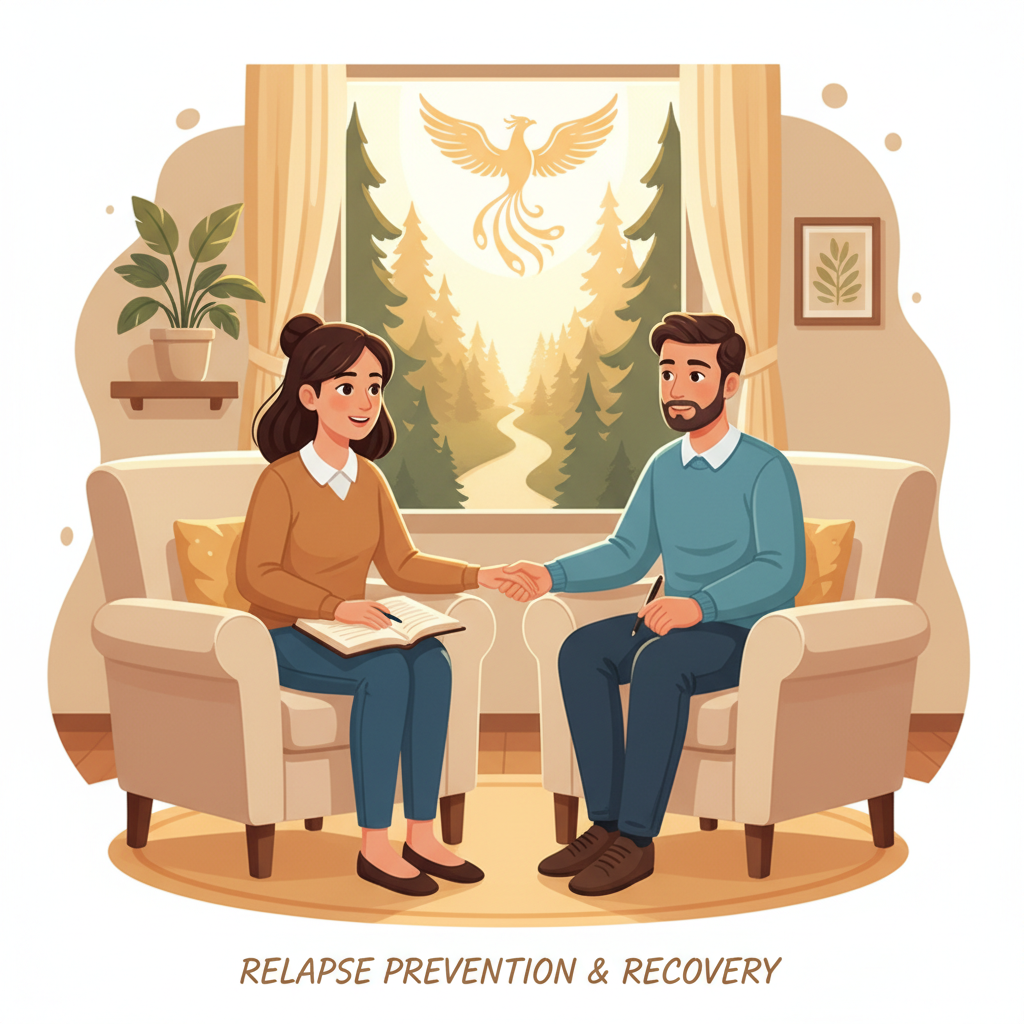
Understanding relapse prevention therapy
Relapse prevention therapy gives you practical tools to stay sober and emotionally steady after treatment. Instead of focusing only on stopping substance use, it helps you understand why you used substances in the first place, how stress and trauma affect your choices, and what you can do differently when cravings or difficult emotions arise.
In research on substance use disorders, relapse is described as a process that unfolds in stages, including emotional relapse, mental relapse, and physical relapse. Learning to recognize and interrupt this process early is a central goal of relapse prevention therapy [1]. When you learn these skills in a safe counseling setting, you build confidence that you can navigate real-world triggers without returning to old patterns.
If you live with trauma, anxiety, or intense emotional swings, relapse prevention is not about willpower. It is about designing supports, strategies, and a treatment plan that fit the way your nervous system has learned to cope. This is where trauma-informed, individualized counseling becomes especially important.
How trauma shapes addiction and relapse
Many people discover in recovery that substance use was closely tied to unresolved trauma. You might recognize yourself in some of these patterns.
Trauma’s impact on your brain and body
Trauma affects the systems in your brain that manage fear, reward, memory, and impulse control. It can leave you:
- Hypervigilant or constantly “on edge”
- Numb, disconnected, or shut down
- Easily overwhelmed by emotions or conflicts
- Drawn to anything that offers quick relief
Substances often enter the picture as a way to quiet intrusive memories, ease social anxiety, or blunt physical tension. Over time, your brain may begin to associate drugs or alcohol with “safety” or “relief,” even as they create serious harm.
Relapse prevention therapy helps you gradually replace that link. Instead of automatically reaching for a substance when you feel triggered, you learn to notice what is happening in your body and mind, and then choose a different response.
Trauma and the relapse process
Relapse is rarely a single event. It tends to evolve in stages [2]:
- Emotional relapse
You are not thinking about using, but you are not taking care of yourself. You might be:
- Isolating
- Stuffing emotions
- Skipping sleep or meals
- Avoiding support meetings or therapy
- Mental relapse
Part of you wants to stay sober, and another part starts thinking about using again. You may:
- Idealize past use
- Minimize consequences
- Bargain with yourself about “just one time”
- Physical relapse
You actually return to substance use.
Trauma can intensify each of these stages. For example, you might withdraw when you feel unsafe, which fuels emotional relapse. Or you might depend on fantasy or “escape thinking” to cope, which feeds mental relapse. A trauma-informed approach to relapse prevention specifically addresses these patterns so you are not blamed for how you learned to survive.
What makes care trauma informed
Trauma-informed relapse prevention therapy is less about a specific technique and more about how your care is delivered. The focus is on safety, respect, and collaboration at every step.
Core principles of trauma-informed care
When your therapist practices trauma-informed care, you can expect them to:
- Prioritize safety
Sessions move at a pace you can tolerate. You are not pushed to disclose details before you have enough stability and coping skills. - Build trust over time
Your counselor is transparent about treatment options, boundaries, and expectations. You are encouraged to ask questions and give feedback. - Support your control and choice
You help decide what to work on, and you can say “no” to interventions that feel too intense or unsafe. - Respect your story
Your symptoms are understood as adaptations and survival strategies, not personality flaws. - Recognize cultural and social context
Experiences of racism, discrimination, or community trauma are acknowledged and, when relevant, integrated into your treatment plan.
A trauma-informed approach can be integrated into any modality, including individual therapy for addiction, group work, or family sessions. The goal is to avoid re-traumatization while helping you build new skills.
Evidence-based therapies used in relapse prevention
Relapse prevention therapy is not a single technique. It is a structured, evidence-based way of combining several therapeutic tools so you can respond more effectively to high-risk situations.
Cognitive behavioral therapy for relapse prevention
Relapse Prevention (RP) was originally developed as a specific form of cognitive behavioral therapy (CBT) focused on identifying and managing internal and external high-risk situations that can lead to relapse [3]. In CBT-based relapse work, you will typically:
- Identify the thoughts, beliefs, and situations that most often precede substance use
- Learn to challenge thinking patterns that increase risk, such as “I already slipped, so there is no point in trying”
- Practice new behaviors in response to craving, stress, and conflict
- Strengthen self-efficacy, your belief that you can stay sober in difficult conditions, which is linked to longer relapse-free periods [4]
Standard relapse prevention therapy usually includes about 12 weekly sessions that focus on triggers, coping strategies, and confidence-building, and it has strong empirical support, especially for alcohol and polysubstance use disorders [3].
Mindfulness-based relapse prevention
Mindfulness-Based Relapse Prevention (MBRP) integrates meditation and awareness practices into standard CBT relapse work. You are taught skills such as:
- Observing cravings, emotions, and body sensations without reacting automatically
- “Urge surfing,” which involves noticing a craving rise, crest, and fall without acting on it [4]
- Developing a nonjudgmental stance toward yourself, especially after lapses
MBRP appears to be about as effective as standard RP and may be particularly helpful if you struggle with trauma-related hyperarousal or dissociation, because it focuses on grounding and present-moment awareness [3].
Contingency management and medication support
For some people, relapse prevention is strengthened by additional clinical tools:
- Contingency management
This approach uses structured rewards for meeting recovery goals, such as providing incentives for negative drug screens. Research indicates that contingency management is one of the most effective behavioral strategies for preventing relapse, with relatively strong effect sizes, although benefits may decrease once incentives end [1]. - Medication-assisted treatment where appropriate
Medications like naltrexone and acamprosate can reduce the risk of alcohol relapse. Studies suggest a number-needed-to-treat of 20 for naltrexone and 12 for acamprosate in preventing return to drinking [1]. For opioid use disorders, combining medications with behavioral therapies is considered standard of care for relapse prevention [5].
In a trauma-informed setting, any medication or structured incentive program is discussed openly, so you can understand the benefits, limitations, and how each option fits your values and goals.
How individual counseling strengthens relapse prevention
Relapse prevention work can happen in many formats, but individual counseling gives you space to connect the skills directly to your personal history, trauma, and day-to-day life.
Comprehensive assessment and personalized planning
A strong relapse prevention plan usually starts with a detailed clinical picture. Through a comprehensive behavioral health assessment, your counselor gets to know:
- Your substance use history and previous treatment attempts
- Trauma experiences, including childhood adversity, relationship violence, or community and cultural trauma
- Mental health symptoms like depression, anxiety, PTSD, or bipolar features
- Current supports, stressors, and living environment
This assessment becomes the foundation for a personalized plan that integrates mental health therapy for addiction and trauma-informed care. Rather than using a generic relapse workbook, you collaborate with your therapist to identify your unique triggers and the specific skills you want to build.
Linking triggers, trauma, and coping skills
In individual sessions, you will map out the situations, emotions, and relationship patterns that most often lead to cravings or lapses. These often include:
- Unresolved grief or loss
- Conflicts with partners or family
- Financial or work-related pressure
- Shame, self-criticism, or perfectionism
- Trauma reminders, such as certain smells, holidays, or places
Together, you and your therapist then develop targeted strategies. For example, if conflict at home is a high-risk situation, you might:
- Practice communication scripts and boundary-setting
- Plan temporary cooling-off strategies that do not involve leaving to use substances
- Build calming tools that you can use immediately after a difficult interaction
If trauma flashbacks or panic are your primary triggers, relapse prevention may focus more on body-based regulation skills, grounding techniques, and trauma-focused therapy, integrated with your addiction counseling services.
Outpatient relapse prevention and your daily life
If you are rebuilding your life after intensive treatment, outpatient relapse prevention therapy can offer vital continuity while you return to work, school, or family responsibilities.
Flexibility that respects your responsibilities
With outpatient addiction counseling, you typically attend scheduled individual sessions, and sometimes groups, while living at home. This structure allows you to:
- Apply new skills in real time and process what happened in your next session
- Maintain privacy and autonomy while still receiving professional support
- Adjust the intensity of services as your needs change
Outpatient work can also be part of a structured recovery therapy program, where you follow a clearly defined plan that may include relapse prevention, trauma therapy, medication management, and peer support.
Integrating trauma treatment into ongoing care
For many people, healing trauma is not something that happens all at once. It needs to be paced so that you can remain stable in your day-to-day life. An integrated therapy program for addiction allows your care team to coordinate:
- Relapse prevention skills training
- Trauma processing methods such as EMDR or trauma-focused CBT
- Medication management when needed
- Family sessions or couples work, if appropriate
This type of coordination helps reduce the risk that powerful trauma work will trigger a relapse, because you and your therapist continually check in about your capacity, safety, and support network.
Relapse prevention therapy is most effective when it treats addiction, trauma, and mental health symptoms as interconnected, not separate problems.
Building your relapse prevention plan
A good relapse prevention plan is both structured and flexible. It evolves as you learn more about yourself in recovery.
Key components to include
Although every plan is personalized, many effective plans address:
- Triggers and warning signs
Specific emotional, social, and environmental cues that increase your risk of returning to use. - Coping strategies and skills
Concrete tools for managing cravings, distress, and conflict, developed alongside your therapist during addiction recovery counseling. - Support system
Names and contact information for people and resources you can reach out to, including therapists, sponsors, peers, and crisis lines. Peer support systems such as recovery groups and peer coaches can be valuable additions, even though their impact is sometimes hard to measure scientifically [1]. - Self-care and lifestyle anchors
Sleep, nutrition, physical activity, spiritual or creative practices, and routines that stabilize your mood and body. - Steps to take after a lapse
Clear guidelines about how you will respond if you use again, such as contacting your therapist, scheduling an urgent session, or reconnecting with formal treatment, in line with guidance from NIDA that relapse signals a need to adjust or resume treatment [5].
You and your therapist can review and revise this plan regularly, particularly after stressful periods or life transitions.
Addressing co-occurring conditions
If you are recovering from opioid use, stimulant use, or polysubstance use, you may benefit from specialized services, such as therapy for opioid addiction recovery or other evidence based addiction therapy. Effective treatment for opioid addiction typically includes medications combined with behavioral support, while stimulant and cannabis use disorders rely more heavily on behavioral therapies, including relapse prevention and contingency management [5].
How to know if relapse prevention therapy is right for you
You may benefit from trauma-informed relapse prevention therapy if:
- You have completed detox, residential treatment, or an intensive program and want to protect your progress
- You recognize that trauma, anxiety, or emotional dysregulation often precede your cravings or substance use
- You have relapsed after “white knuckling” it or relying mainly on willpower and want a more structured approach
- You want individualized, outpatient support that you can fit around work, school, and family life
- You are interested in exploring how trauma-focused methods, mindfulness, or medication might support your recovery
If these statements resonate with you, an outpatient program that offers substance abuse mental health counseling within a trauma informed care program can provide the kind of comprehensive support that addresses the full picture, not just your substance use.
Moving forward with integrated, trauma-informed care
Relapse prevention therapy does not promise that you will never struggle again. Instead, it equips you with knowledge, skills, and support so that when challenges arise, you are not alone and you are not without options.
Working with a provider who offers clinical trauma informed treatment and integrated addiction counseling services allows you to:
- Understand how trauma, mental health, and addiction intersect in your life
- Build a realistic, personalized relapse prevention plan
- Access outpatient care that respects your responsibilities and your pace
- Adjust your treatment when circumstances or needs change
Recovery is a long-term process, and relapse prevention therapy is one way you can actively shape that process instead of waiting for the next crisis. With the right support, you can move from simply avoiding substances to building a life that feels safer, more stable, and more aligned with who you want to be.